

29 October 2026
National Xinomavro Day
Some call it “the Greek Nebbiolo.”
But is it only red? Not at all.
Xinomavro can be made into red, rosé, white and sparkling wines. And that may be one of the best reasons to get to know it a little better.
Every November 1st, wine lovers celebrate International Xinomavro Day, first established in 2019.
One grape, many different styles and countless ways to discover it.
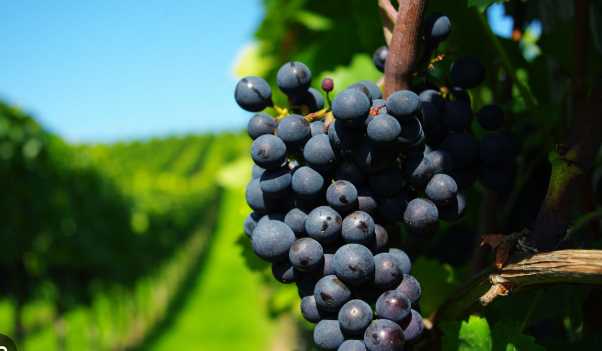
Xinomavro and Nebbiolo: why are they compared?
If you love Barolo or Barbaresco, Xinomavro definitely deserves a place on your list.
Nebbiolo, the famous grape of Piemonte in Italy, is probably the most useful international reference point for someone tasting Xinomavro for the first time.
| Xinomavro | Nebbiolo | |
|---|---|---|
| Colour | Often relatively pale | Often relatively pale |
| Acidity | High | High |
| Tannins | Pronounced | Pronounced |
| Ageing potential | Very high | Very high |
| Typical aromas | Sour cherry, red fruit, tomato, olive, herbs | Cherry, rose, herbs, earthy notes |
The comparison helps explain the style, but it does not mean that Xinomavro is simply “the Greek Nebbiolo.”
It has its own personality and often shows distinctive aromas of tomato, olive, herbs and red fruit.
The red grape that does much more than red wine
From the same dark-skinned grape, winemakers can produce:
- Red wines, from fresher styles to complex wines with long ageing potential
- Rosé wines, with freshness and vibrant red fruit
- White blanc de noir wines, when the juice is separated quickly from the skins so that very little colour is extracted
- Sparkling wines, where Xinomavro shows a completely different side of its personality
There are also semi-sparkling, sweet and more experimental expressions.
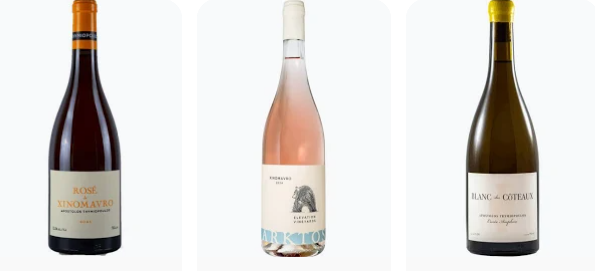
If there is one place synonymous with Xinomavro, it is Naoussa
At the foothills of Mount Vermio, Naoussa is the most iconic wine-producing region for the variety.
PDO Naoussa wines are made exclusively from Xinomavro and are always red.
When young, they usually show high acidity and firm tannins, but they can evolve beautifully with time. With ageing, the fruit develops alongside more complex aromas of spice, earth, leather and dried fruit.
So if you want to understand classic Xinomavro, Naoussa is one of the best places to start.
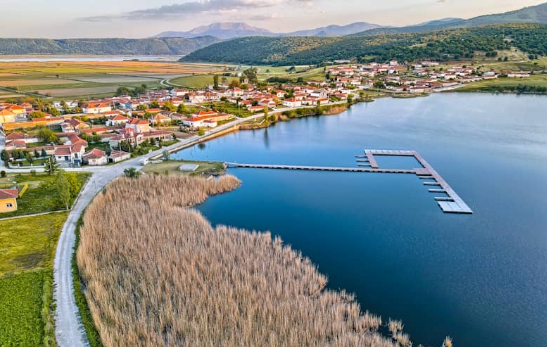
And then there is Amyndeon
Travel further north and higher in altitude, and the same grape begins to change character.
Amyndeon sits at high altitude and has a cooler, more continental climate.
Here, Xinomavro is strongly associated not only with red wines, but also with rosé and sparkling wines.
The grape’s naturally high acidity, combined with the cooler conditions of the region, helps create fresh and lively styles.
Same grape. Different terroir. Completely different experience.
Where else can you find Xinomavro?
Naoussa and Amyndeon are the two names you will hear most often.
But Xinomavro does not stop there.
In Goumenissa, it is used in red wines together with Negoska.
In Rapsani, near the slopes of Mount Olympus, it is blended with Krassato and Stavroto.
Siatista and Kozani
In the mountainous areas of Western Macedonia, Xinomavro can be found in Siatista, Velventos and the wider Kozani region.
In Siatista, it can even be used in white wines and sweet sun-dried wines — a very different expression from the classic red Xinomavro of Naoussa.
Thessaloniki, Epanomi and Halkidiki
Xinomavro can also be found in the Thessaloniki region, including close to the sea in Epanomi.
Plantings can also be found in Halkidiki and Mount Athos, showing just how differently the variety can express itself depending on the local microclimate.
Xinomavro is a child of Northern Greece, but it does not have just one home.
What kind of climate does Xinomavro need?
Xinomavro is a late-ripening and demanding grape variety.
It needs time to ripen properly, which means that weather conditions right through to autumn can play an important role.
Ideally, it needs:
- enough warmth during the growing season for the grapes to ripen fully
- cool nights, often helped by altitude, to preserve freshness
- sufficient water, as the variety does not respond well to severe drought
- well-drained soils
- careful vineyard management
It is not an easy grape to grow.
If the vintage is too cool and wet, the grapes may struggle to ripen properly. If conditions are too dry, the vines can also become stressed.
Perhaps that is why the best expressions of Xinomavro show such a strong sense of the place where they were grown.
A glass for November 1st
International Xinomavro Day is celebrated every year on November 1st.
The easiest way to celebrate?
Try a Xinomavro you have never tasted before.
If you usually choose an aged red, try a rosé.
If you only know Naoussa, look for one from Amyndeon.
And if you think Xinomavro is always red…
start with a blanc de noir or a sparkling wine.
Maybe the best way to describe Xinomavro is not “the Greek Nebbiolo” after all.
Maybe it is simply the Greek grape with a thousand faces.